Kashmir Willow (This is still being worked on).
In cricket the term Kashmir willow is said with contempt and utter derision, but is it really that bad and why has it got such a bad reputation?
As someone who bowls and bats at number 9,10 or 11 I've never understood why anyone who can't bat and there are many of us at club level (Some of whom don't bowl) would ever pay for a good quality bat?
Is the bad rep down to the characteristics and properties of the wood or is there something about the way that it is sold and marketed?
So, I've spent a little bit of time trying to dig up some good news for Kashmir bats but have come across very little that I can use. If you look around the internet there's anecdotal information that people like Raul Dravid, Sunil Gavaskar and Sachin Tendulkar have used Kashmir bats 'Early in their careers'. But I couldn't find any concrete evidence of that being the case, it might be true in that when they were kids they used Kashmir? There's another argument that - in the same way that English willow varies massively from the bats the pro's use down to grade 5 . Kashmir obviously has similar characteristics in accordance to where it's grown, the local climate, weather, soil types etc. It may be the case that within India there are bespoke bat makers that are able to source better quality Kashmir willow and for all we know this may be passed on to the pro's when they have to be seen to promote the local bats? This is of course speculation, but it does seem somewhat ridiculous to say that all Kashmir willow is of one grade... "bad".
You can easily find articles about how the bats are made in India and the owners of companies owning up to the fact that they'll sell any old rubbish to the locals. There's also the numerous articles and forum pages that discuss the fact that if the bat has got Tendulkar's name on it and a fake MRF sticker it'll fly out of the door in it's thousands irrespective of the quality of the wood. Again this makes total sense when in the subcontinent they do play a lot of cricket socially using rubber balls and tape balls. Where I live in the UK there are loads of blokes who work in the IT industry who are 1st generation immigrants from the subcontinent region and they play their cricket in this exact way, so Kashmir for them is no doubt ideal. But to say all of it is one grade has got to be complete nonsense surely?
Companies such as Kookaburra, Slazenger, Puma and Adidas all have amongst their ranges Kashmir bats... Surely these big name brands have some say in the quality of the willow that they stick their brand names on?


As far as I'm concerned this advert is incredibly misleading. You can see the bat, the advert owns up to the fact that it's Kashmir willow, but other parts of the advert give the impression that Jos uses this bat "As used by" and "Used by pro's" and finally beneath the image the text pointing out that is "Armed with the Verve". The bat above retails for about £30 in the UK. The same price as the bats that I'm testing out at the moment here .The uninitiated, unfortunately are not aware that in fact the bat that Jos is more than likely using is a souped up version of this bat here below... Although some pro's do use the top range bats straight off the shelf alongside the bespoke versions.

I don't think this type of marketing does Kashmir willow any favours at all, the wording should indicate it's the style of bat Jos uses, not imply it is the bat he uses. To be honest he probably doesn't even use the £550 version, instead he has his bats made for him by Kookaburra's master bat-makers using one of the very unique pieces of grade 1 willow set aside for pro's and people that can afford to have a bat made to order at the factory. See this article here.
I'm digressing a little here, the point I was looking to make was that companies such as Adidas, Puma, Gunn and Moore, Kookaburra etc. are not in the business of selling shoddy goods. They have a name and reputation to keep, so if you buy one of their Kashmir bats, I think with a little research you're going to quickly grasp that it isn't the same product as a grade 1 English willow bat and that is obviously reflected in the price... As little as £14.00 for the bat I use as opposed to the example above at £439.95. But it is a bat and it will function as a bat. If you're a lower end batsman, tail-ender like us, even if you take it from the shop and walk out onto a cricket pitch and start using it, it is probably going to last you a season without any preparation or knocking in. Alternatively when you hit the first ball it may break. But that applies to the £500 bats as well... read this here - especially the bit headed 'Damages'... http://www.cricketdirect.co.uk/all-about-cricket-bats.aspx
That last link from cricket direct has a relatively fair take on Kashmir bats and they sell a good range of them at good prices. The advice is pretty standard in that they recommend them as low end adult bats, what that actually means and infers I'm not quite sure, but I'm sure if you do play cricket you'll be more than aware that cricket is pretty batting-centric, everything is pretty much about the batsmen, they're seen to be the super-heroes, so if you're a bowler you're a bit part player. Batsmen are never forced to bowl and therefore humiliate themselves, whereas bowlers all have to bowl at some point irrespective of whether we're any good at it or not. We don't like it and the irony is that fellow bowlers are complicit in our pain and humiliation. It seems to me in that act of enforced vulnerability we look for solutions and one of the solutions we seem to turn to and grasp at, is the belief that maybe the bat and the quality of the bat may have some bearing on the outcome? I don't think it does and I think you humiliate yourself further by buying a top quality bat and making yourself look like a fool.
Is it not better to be completely indifferent to the bat and own up and say 'Mate, I barely get the chance to hit the bloody ball - so why would I pay £400 for a bat'?
But, all that aside, there is still virtually nothing on the internet that indicates any real in-depth analysis of the virtues (if there are any) of Kashmir willow bats. During the research that I've completed in compiling this article I came across only a handful of positive reviews
Double click on the image below for a video review where the bloke talks about the use of Kashmir bats in a relatively positive way...

I think I'll let 'Kev' a massive contributor to the forum Planetcricket.org have the final say on Kashmir bats...
"As a general observation, you can't compare the bat Tendulkar uses to the same bat in your local cricket store. They aren't the same. Is a very good Kashmir willow bat as good as a decent English willow bat? I don't know, logic tells me that there must be some very good pieces of Kashmir willow around where the fibre structure is pretty similar to English willow but I doubt very much these pieces of willow ever make it to a shop. But as this is the Your Cricket section, I suppose your choice of bat should come down to 2 things. 1: How much money do you have to spend and 2: Do you hit the ball sweetly. Because if you can't get bat on ball does it really matter what your bat is made of."
Other people have said that better quality Kashmir bats are as good as grade2 and grade 3 English willow and a fraction of the cost?
Trees and geography. The best bats made throughout the world seemingly are made of English Willow sourced from South East England primarily from my own county Essex and the adjacent county Suffolk. The wood is grown in a haphazard way in that there doesn't seem to be such a thing as enormous Willow woods set aside for just that purpose. If you search 'Willow wood plantation' you'll find images of small plantations, instead land-owners are encouraged to grow the tree as a long term investment seemingly in relatively small copses. The tree is often associated with damp areas and rivers, and throughout Essex you'll see rivers lined with Willow trees.
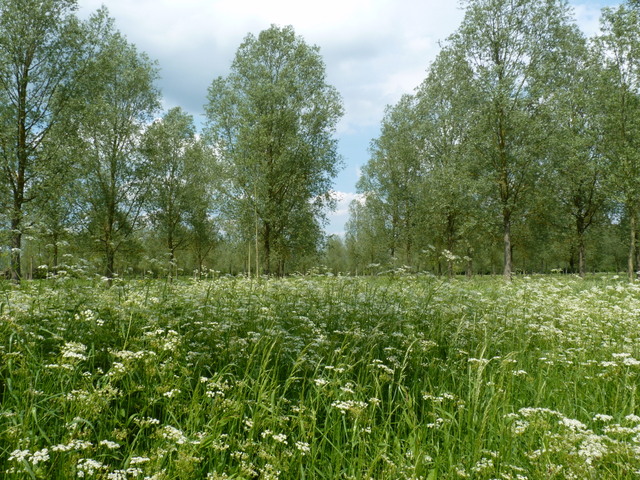
The English version
The best bats in the world irrespective of where they are made use the same wood, almost exclusively from the same source - JS Wright in south east England, just up the road from where I live. The tree that is grown is found primarily in the Northern Hemisphere... "salix alba caerulea"or White Willow that has the characteristics and properties that suit high quality bat making...
The climate, geography and growing conditions in this part of the world combined with nearly 2 centuries of forestry and agricultural skills mean that the properties of this wood are unique. So unique that virtually every high quality bat has it's origins in this small area.

Bat Willow (salix alba caerulea).
 And this is down to the climate and geographic features. I have noted whilst researching this article that there companies based in the north of the UK that have started to grow willow for the same purpose see here but having said, that this opening article alludes to the fact that they confirm that they get most of their willow from the region I've indicated.

Is Kashmir willow any good at all and why has it got such a bad reputation?
Positive - Kashmir http://www.ebay.co.uk/gds/Buying-Cricket-Bats-HELP-The-myth-and-scam-of-EWNI-/10000000010832242/g.html
http://shop.dreamcricket.com/dreamcricket/pavilion/buyingguide_Englishwillow_versus_kashmirwillow.asp
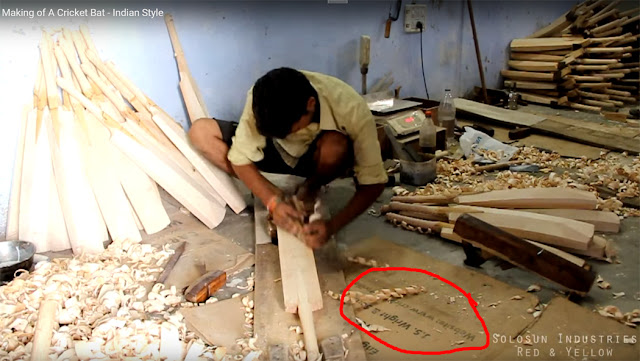
This image here is from a video on Youtube at 3 mins into the video the bat-maker is seen shaping a bat and if you're observant you'll notice that the piece of cardboard that he's squatting on is from the willow supplier JS Wright indicating that this bloke produces top quality bats using English willow in India. Which adds more confusion to any claims that bats made by small operations in India make false claims about the proprietary of their products.(Double click the image for the video).
It seems that without doubt if you can bat and you're an opening batsman or a middle order batsman that can hit the ball with ease and finesse, there's little reason to choose Kashmir if you can afford the real deal. There's an annoying Youtube bloke here that makes a good case for using one or the other and if you can get past the dumb self promotion inserts it's worth listening to.
So what are the differences - why is there such a massive difference in price and quality?
If you do pay nearly £300 for a bat it strikes me that you're going to be able to use it properly and you're going to look after it. Buying an expensive bat doesn't mean that the bat is going to last years and years, especially if you're not that good at batting. All of the top quality bat manufacturers advise that their bats should be knocked in, but they all have a legal caveat that says that if they break the first time they're used that's your fault not the bats or the manufacturers. There is a really interesting article on cricinfo that discusses the trends in bat making pointing out that the leaders in this industry respond to the styles and approaches used by international batsmen. Currently the trend is towards big thick edged bats but with no additional weight factor. As a consequence the bats that are made for pro's are very different to those bought from the shop.
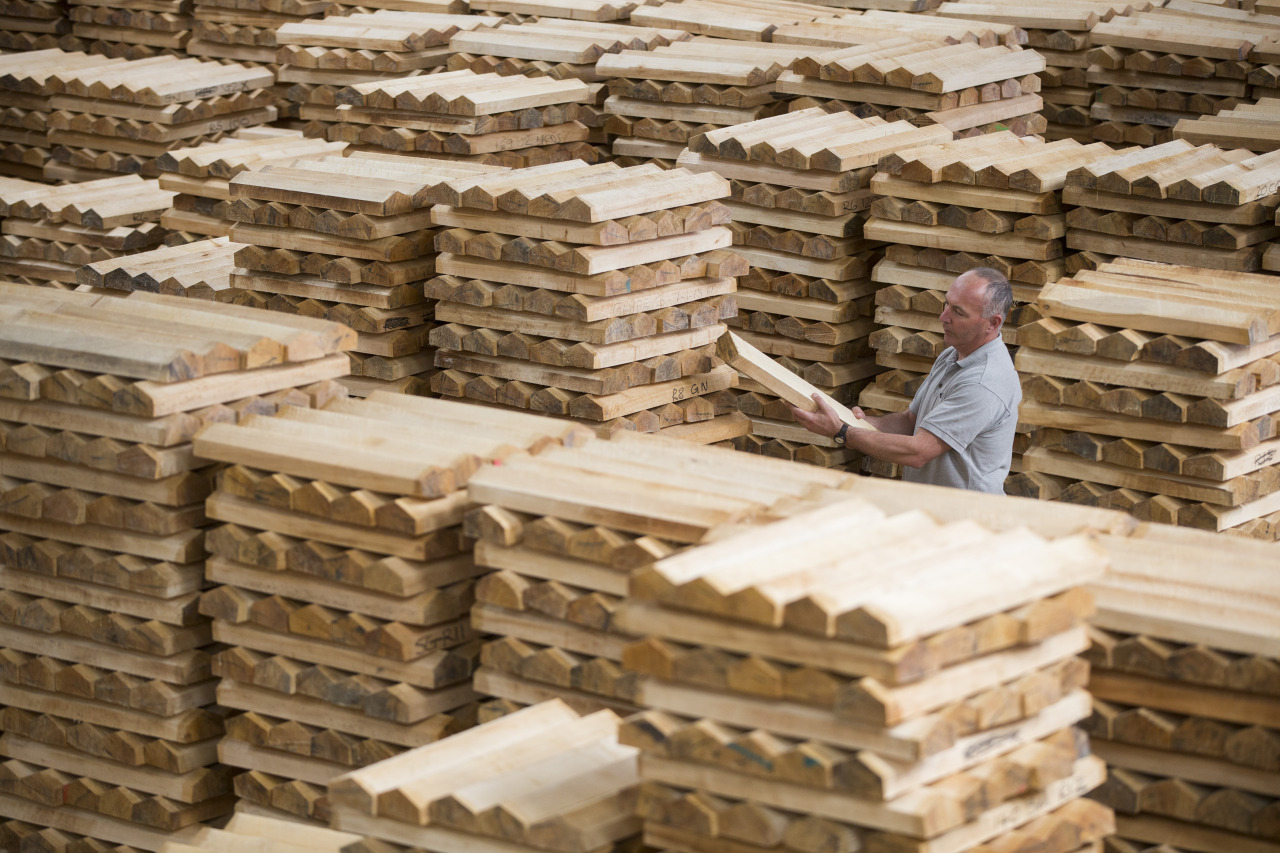
Double click image for Neil Halls documentary images of cricket bat manufacturing.
The manufacturers who sponsor batsmen are constantly looking for individual clefts that fulfil this near impossible combination of weight, shape and strength and the expectations of the wood are now being pushed to the limits of attainment, with an acknowledgement that the bats wont last. In response the manufacturers then have to produce a similar bat for the club players and the next grade down is chosen, but the longevity, durability and strength of such a bat pushed to it's physical limits is such that they are susceptible to breaking. What you end up paying for is a superbly made bat, that works well and plays well up to a limit. But it's not the bat that you see the worlds best players using.
As one of the respondent's to the linked article above says...
"Truth of the matter is, general public simply does NOT have access to the grade of willow reserved for international batsmen. That willow is already filtered out at J.S. Wright farms and kept away from being shipped to general bat makers. Asian bats that are big, light and available to general public are basically over dried clefts of willow that is pressed very, very lightly or not pressed at all. This gives a bloated look to the bat but fact of the matter is, such willow is no comparison to naturally super low density clefts that are used by international pros".
Kashmir Willow on the other hand is a completely different prospect primarily because the wood is denser and heavier and therefore can't ever compete on the same level as the English Willow grown in South East England (JS Wright).
I'm currently in position where I feel that Kashmir willow definitely has its merits for any mortals who don't fancy themselves as over-looked Steve Smiths or Joe Roots. Let the deluded fork out hundreds of pounds/dollars for an inferior version of the bat that they see the pro's using in belief that there is some kind of comparison. Whereas possibly (and I am saying possibly because I might be totally wrong) the better option given their skills might be the much maligned Kashmir bat - denser and heavier and potentially better for hitting the ball for fours and sixes? So why not consider Kashmir or at least give it a go?
.jpg) Looking at it and wondering why it had lasted so long I wondered if the bat face tape had anything to do with its longevity? I'd also always been puzzled by the fact that being covered in bat-face tape - how did it last this long without being oiled? So some research was done (See below) into knocking bats in and I discovered a few things as we went about the process of getting the bat ready to use.
Looking at it and wondering why it had lasted so long I wondered if the bat face tape had anything to do with its longevity? I'd also always been puzzled by the fact that being covered in bat-face tape - how did it last this long without being oiled? So some research was done (See below) into knocking bats in and I discovered a few things as we went about the process of getting the bat ready to use.Joe's Slazenger V1200 Premier
- Despite the fact that the bat has been pre-knocked in, virtually everyone says that it still needs to be done for a few more hours.
- Oil the bat 3 times over 3 or 4 days. Oil it and then leave it for 24 hours. Only a small bit of oil is required
- The edges of the bat are important and so too is the toe and these will need special attention see below.
- A lot of people smooth off the edges of the bat rubbing another round piece of wood (The handle of a mallet or bat grip cone) run that along the edge and round it off. Then, initially very gently, start to knock the edges in gradually over the first hour.
- The willow is very soft and you'll see it easily dent as you start to compress it with the knocking in process.
- It is going take hours and it is going to get on everyone's nerves because it is noisy.
8/9/15 Update on this bat.
It's the end of the season and it's going well, no obvious damage to it at all and Joe's score runs with it and I've borrowed it a couple of times and similar to Joe scored runs and if weren't for the bloke at the other end being bowled we both looked set to beat our current best scores in a match with this bat. It seems to be that it's light and has a good pick-up and we've just been able to play with a lot more aggression and positivity. I'm so impressed with the bat I've just ordered one for myself!
I then thought okay who is this company, and what's the deal with the English Willow? Knowing a little bit about this I thought this claim could easily be stretching the truth a little or it could be an outright lie.
Scenario 1. It may be that this is a genus of Willow that is found primarily in the Northern Hemisphere "salix alba caerulea"or White Willow that has the characteristics and properties that suit bat making, has been taken as saplings or seeds and then grown in India. So in essence you could claim that this is 'English Willow' because it's the genus that is found in England?
That sounds to the uninitiated like a fair ploy, but you miss some fundamental facts that are massively important when looking at Bat Willow (salix alba caerulea) above and its properties and characteristics... The growing conditions. I might be wrong, but I've always been under the impression that the worlds best superior willow is grown in a specific area in England - Essex or Suffolk (See map).
Bibliography/Sources
Salix Cricket Bat Company
http://www.salixcricketbats.com/inside-salix/manufacturing.html
Imperfections in Willow
http://www.cricketbatwillow.com/imperfections-in-willow
English Willow facts
http://www.quantumcricket.com/willow.html
JS Wright and sons
http://www.cricketbatwillow.com/
Buying and choosing Kashmir cricket bats
https://www.youtube.com/watch?v=PcnzdUNPKm8
Master Bat makers view on bats
http://www.espncricinfo.com/magazine/content/story/787773.html
Conclusion at this point so far.
I'm quite happy to take the risks involved in this process, it may be the case that both these Ebay bats play like dogs, but if you do your research there are a number of pro's and con's relating to the use of Kashmir Willow bats and this bloke here explains the differences in a neutral way.
The main reason I advocate their use is that neither my son or I bat that well and it's pointless buying an expensive bat. Yes, we could buy cheap Kashmir Slazenger bats where you know what you're buying and you can go to the shops and pick one up and feel the weight and whether it suits you, but a bigger thicker bat such as Bat 3 as far as I'm aware you wont be able to buy for £30. It's a risk, but that remains to be seen. Watch this space.
The conclusion - If you have a look at the other 3 posts where I bought and knocked in a couple of Kashmir bats, you'll see that I've had to come to the following conclusions below. My mission here was to actually test these out and offer some evidence as to why they are either good or bad. Unfortunately, they did turn out to be pretty poor...
(1). There's no apparent grading system for them, you can't seemingly buy Kashmir Willow of better quality. It may be the case that if you're in India there's some way that you can source the wood closer to the point where it's shaped and therefore make choices about the bat you buy, but here in the UK this isn't possible and you have to buy what's on the shelf.
(2). A high quality English willow bat here in the UK is going to cost you almost £500, a bat that costs £30 is never going to match that. But what might that £30 be capable of - it would never be good enough for a bloke that expects to walk out on the wicket and score 50 runs every game, but would it be any good for a tail-ender?
(3). Both the bats were knocked in to some extent despite some of the advice on-line advising not to do so. Both bats despite being knocked in to differing extents suffered major damage within a short period being used in the nets against Bola plastic cricket balls. Neither bat was used against being propelled at a speed faster than 68mph.
Finally my next move is to look at this company as an option...
http://www.msrcricketbats.co.uk/about-msr/
Bibliography/Sources...
https://www.youtube.com/watch?v=PZkIV6jz8h4
https://www.youtube.com/watch?v=PcnzdUNPKm8
https://www.youtube.com/watch?v=zrEUC42Vi5I
https://www.youtube.com/watch?v=BffU7Fwx3Qk
https://www.youtube.com/watch?v=Z_e3AFndzmM
https://www.youtube.com/watch?v=hgM8ouMuiJQ
https://www.youtube.com/watch?v=410v5fkvoYI
http://www.handmadebats.co.uk/store/index.php?route=information/information&information_id=9
https://www.youtube.com/watch?v=aEbEENWnICo - Jason Mellet
http://www.gettyimages.co.uk/detail/news-photo/an-employee-shaves-wood-from-the-blade-of-a-handmade-warsop-news-photo/473977596
http://cricketgearreviews.com/the-deep-and-dark-secrets-of-cricket-bat-making/ - Jason Mellet
http://www.planetcricket.org/forums/threads/english-and-kashmir-willow.42007/page-2
http://www.cricketdirect.co.uk/all-about-cricket-bats.aspx
https://www.youtube.com/watch?v=qmwLa5gALio
- this video is interesting as it's a bat being made in India
http://www.bbc.co.uk/news/business-35070666 - Kashmir willow
For an objective test on Kashmir bats have a look at this video here (Click on the image).

And this is down to the climate and geographic features. I have noted whilst researching this article that there companies based in the north of the UK that have started to grow willow for the same purpose see here but having said, that this opening article alludes to the fact that they confirm that they get most of their willow from the region I've indicated.
So any willow that is grown outside of East Anglia (Essex & Suffolk) and stored in conditions and weather found in the same region, doesn't have the same properties and characteristics. Yes it's the same tree genus, but the weather and growing conditions do not produce the same superior willow.
Scenario 2 Even more unlikely - they buy all the duff wood from companies such as JS Wright & Sons and GR Green, put it in containers and ship it out to India to make bats that they can claim are made of English willow? Again, I can't find any evidence of this at all and even if they did - it would be the duff wood that we reject.
Scenario 3 They just lie? The wood is bog standard Kashmir Willow grown in India.
You've only got to type in cricket bat manufacturing in Youtube and you'll get a massive insight into the type of industry this is and the scale of these industries. This video here gives a good over-view...
Furthermore if you try and look deeper into the company that has supplied my bat, you'll struggle to get that far, the details are very scant, but it appears to be a similar small scale company as those you'll find if you search Youtube as suggested above.
Bibliography/Sources
Salix Cricket Bat Company
http://www.salixcricketbats.com/inside-salix/manufacturing.html
Imperfections in Willow
http://www.cricketbatwillow.com/imperfections-in-willow
English Willow facts
http://www.quantumcricket.com/willow.html
JS Wright and sons
http://www.cricketbatwillow.com/
Buying and choosing Kashmir cricket bats
https://www.youtube.com/watch?v=PcnzdUNPKm8
Master Bat makers view on bats
http://www.espncricinfo.com/magazine/content/story/787773.html
Conclusion at this point so far.
I'm quite happy to take the risks involved in this process, it may be the case that both these Ebay bats play like dogs, but if you do your research there are a number of pro's and con's relating to the use of Kashmir Willow bats and this bloke here explains the differences in a neutral way.
The conclusion - If you have a look at the other 3 posts where I bought and knocked in a couple of Kashmir bats, you'll see that I've had to come to the following conclusions below. My mission here was to actually test these out and offer some evidence as to why they are either good or bad. Unfortunately, they did turn out to be pretty poor...
(1). There's no apparent grading system for them, you can't seemingly buy Kashmir Willow of better quality. It may be the case that if you're in India there's some way that you can source the wood closer to the point where it's shaped and therefore make choices about the bat you buy, but here in the UK this isn't possible and you have to buy what's on the shelf.
(2). A high quality English willow bat here in the UK is going to cost you almost £500, a bat that costs £30 is never going to match that. But what might that £30 be capable of - it would never be good enough for a bloke that expects to walk out on the wicket and score 50 runs every game, but would it be any good for a tail-ender?
(3). Both the bats were knocked in to some extent despite some of the advice on-line advising not to do so. Both bats despite being knocked in to differing extents suffered major damage within a short period being used in the nets against Bola plastic cricket balls. Neither bat was used against being propelled at a speed faster than 68mph.
Finally my next move is to look at this company as an option...
http://www.msrcricketbats.co.uk/about-msr/
Bibliography/Sources...
https://www.youtube.com/watch?v=PZkIV6jz8h4
https://www.youtube.com/watch?v=PcnzdUNPKm8
https://www.youtube.com/watch?v=zrEUC42Vi5I
https://www.youtube.com/watch?v=BffU7Fwx3Qk
https://www.youtube.com/watch?v=Z_e3AFndzmM
https://www.youtube.com/watch?v=hgM8ouMuiJQ
https://www.youtube.com/watch?v=410v5fkvoYI
http://www.handmadebats.co.uk/store/index.php?route=information/information&information_id=9
https://www.youtube.com/watch?v=aEbEENWnICo - Jason Mellet
http://www.gettyimages.co.uk/detail/news-photo/an-employee-shaves-wood-from-the-blade-of-a-handmade-warsop-news-photo/473977596
http://cricketgearreviews.com/the-deep-and-dark-secrets-of-cricket-bat-making/ - Jason Mellet
http://www.planetcricket.org/forums/threads/english-and-kashmir-willow.42007/page-2
http://www.cricketdirect.co.uk/all-about-cricket-bats.aspx
https://www.youtube.com/watch?v=qmwLa5gALio
- this video is interesting as it's a bat being made in India
http://www.bbc.co.uk/news/business-35070666 - Kashmir willow
For an objective test on Kashmir bats have a look at this video here (Click on the image).
My other active blogs include…
This is an example of some of the
bowling vids on my Youtube channel