Bowling development. 5 weeks to go till the first proper game of the season, 3 weeks till the chance of a friendly match. Not long to work on the new bowling action that I've been developing since last September. Quick re-cap, last season went really well at the start because of the input and feedback from a wicket keeper we had play with us for a number of weeks (Mike Blerkom). He made some observations about my bowling in that I had a couple of basic run-ups... (1) A Terry Jenner-esque walk to the crease and bowl off of 2 steps or (2). A longer run-up albeit all over the place and inconsistent. He advised me to stick with the longer version and I took notice as he's a current 2nd XI player and has in the past played in the 1st XI and knows a bit about cricket.
Up until I strained my Achilles tendon batting I'd bowled better than I have done for years and on reflection at the end of the season made the decision to work on the longer run-up. This was also influenced by watching a video featuring Glenn McGrath on how to work out your optimum run-up. See here.
So, in September I made a start... see my Youtube channel here. A big turning point came when Tony M a coach and contributor on Big Cricket contacted me directly and gave me some pointers and advice. My bowling then started to come together and by the end of November when winter set in properly it was looking very promising. Winter put a stop to the development and now I'm trying to play catch-up a little, slightly thwarted by the fact that so far the Easter break here in the UK has been crap as its a lot earlier in the year than usual. Fingers crossed the forecast from tomorrow onwards is for an improvement and I'll be able to work on some of the things I've made observations of in the video below. Double click on the image below to watch the video.
In my usual lecturer style and advocating what I teach, I'll reflect on the bowling using the Gibbs reflective method...
What Happened. Primarily we were at Writtle to work on our batting see here but with three of us it meant while two were in the batting net there was an opportunity to have a bowl so I spent 10 minutes or so bowling. I mixed up bowling with and without a ball.
Feeelings. Initially I didn't think it went that well, it felt as though there were a number of problems with the bowling action and the outcome at the other end wasn't that special either.
Evaluation (Good and bad). Good was the fact that I actually took the time out to bowl when that wasn't the key objective of the Writtle visit and the fact that I had the camera to record myself. Other good things included the speed that I was bowling and my overall fitness. It was commented at the last net session at the club that my bowling speed has gone up and this was one of the key things that Mike Blerkom thought was a key thing I needed to work on. Bad stuff, despite the fact that it looked fast it didn't feel as correct as it had been back in November when I was spending more time working on the action. Also the percentage of good balls versus bad balls at the business end wasn't good.
Analysis. Without going into to technical stuff straight away, watching the video back there's obvious things going on. One that I noticed is that I kind of waver as I approach the crease. The other thing which is a throwback to the old days, is the observed over-rotation. Other key observations are the hip and knee thrust aspect, the hip and knee don't drive through properly in most of the footage in the original 10 minute version of the video. When bowling without the ball it's a lot better, but in this session I wasn't able to bring that aspect of the action with the ball in my hand, so that needs some work.
I think the main thing is the lack of time at the moment given over to bowling practice. Conventional club nets sessions are useless because of the period of time between balls, so I need to set aside bowling time amongst all of the being put into developing my batting. I think if the time is given over to bowling, the changes will come along with improvements quite quickly. Looking at the video, there's a couple of things I know I should work on straight away... (1). The hip-drive and (2). The over rotation. I think with the hip drive, the over-rotation might come together as a consequence of working on the hip-drive.
At the start of the bowling action in the first phase PDS, I note in the video that my head turns to the side during the gather, I'm not sure if this is an issue or not, but it's something I'll keep an eye on though in the next sequence of videos which hopefully I'll shoot tomorrow. There are other issues such as not getting right up on the toes at FFC, but I'll leave that for the end of the coming week.
Conclusion. It seems okay, the few problems I think will be fairly easy to iron out, and possibly the key thing to do is bowl more so that the action is grooved and increases in consistency.
Action plan. Work on the hip drive tomorrow and the over-rotation.
This bat never arrived. Ebay refunded me in full. I would avoid this company. This is one of a number of blog posts where I'm looking at Kashmir bats and whether they really are that bad? There's loads of opinion out there about how bad they are, but very little in the way of explanations and evidence. I'm testing out three this season, knocking them in over the winter and then I'll be using them in the nets and over the season in 2016. (See bottom of the blog for the other 2 bats). Ebay Bat no.2
Continuing with my investigations into the use of Kashmir bats this is the 3rd of the three that I'm preparing. See the links at the end of this post for links to the other two.
Bat 2 as I'm referring to it at the moment is another Ebay bat sold on the promise that it has massive fat edges 45mm thick and can be obtained with a weight between 2lb 12oz and 3lb 3oz. When I first came across the advert I contacted the seller...
Dear Sir,
You've listed the weight between 1250 and 1450 grams, is there any way that if
I ordered this bat you could guarantee that I'll receive a 1250 or somewhere
near that weight bat? 1450 would be far too heavy for me.
The seller Sportscentre21 replied quickly with... Ok no issues😄 just let me know after placing the order
The description in the Ebay advert was... Thick edge English willow (nurtured in india) cricket bat. Massive performance. Cannot be found at this price. This cricket bat comes with various FREE Add-ons' that for protection of the bat and to take care of the bat. Weight and grains may vary. weight of the bat will be from (1250 - 1450) gms. This package includes following items.
= 1 THICK EDGE ENGLISH WILLOW (Nurtured in India) cricket bat. = 2 PENTA BAT GRIPS = 1 WELL FINISHED PADDED BAT COVER (NOT THE ORDINARY ONE) = 1 TOE GAURD
This one again in the region of £30 with the postage. The bat they say is £16.00 just for the bat. What you have to realise is that the blokes that make these bats are being paid approx. 200 rupees a day to do the work, in the UK that's £2.00 and watching the video's these blokes work fast and hard and the yards and buildings they work in are surrounded by thousands of bats. The clefts must cost next to nothing to buy from the Kashmir wood suppliers and when you're paying your staff to make x amounts of bats per day at £2.00 a day, selling one at £16.00 is a good mark up I guess.
Again these are all pretty wild claims for such a cheap bat, there is though in this advert the inclusion of the phrase English Willow nurtured in India. There seems to be no real information on what this actually means and Jason Mellet claims it's a phrase used to confuse an uninformed public. My own understanding is that it's the same variety of willow species that we grow here in the UK under optimum conditions, but grown in India in far from optimum conditions and therefore an inferior product.
I know these bats are cheap and nasty, but the question I'm looking to answer is - if they're knocked in and prepared as though they're expensive bats are they as good as a Slazenger bat that you'd pay a similar price for?
28th November - Ebay Bat 2 Was ordered at the end of November 2015 and now a month later still hasn't arrived. Remember bat 2:11 was ordered and sent within 3 days! As I write hasn't arrived yet and will take a lot longer to arrive. Looking at the negative comments on Ebay regarding this supplier, some of the them are about the time taken to deliver the bat. I'm expecting it to arrive about Dec 10th it's Nov 28th as I write. What I'll be interested in seeing is the thickness of the edge as this is their USP (Unique selling point) and one of the key reasons I've bought it and no doubt other people will be doing the same. Watching the site, there are a lot of people watching so this feature is something people desire especially given the weight spec's.
25th December - Ebay Bat No.2 as above still hasn't arrived and I've now lodger a formal complaint with Ebay in order to try and speed up the process or maybe get my money back. I'd rather have the bat in order that I have a look at it and see how it compares with the other two bats that I'm readying and comparing. Reviews of the other 2 bats are here...
2nd Jan 2016.
This bat never arrived and Ebay refunded me my money in full. I would advise that you avoid buying from this company.
It's obvious, a proper English Willow bat grown in Essex or Suffolk is going to cost you a lot of money. If you see them being sold anywhere else cheap they are not going to be the real deal. If you're looking for a high quality bat, go to a high quality supplier after doing your research and be ready to part with a load of cash.
If you don't follow this blog, here's a run-down of what's happening. My bowling action is inconsistent, but for the most part being a 4thXI player I get away with it and still do okay. This season I bowled well coming off of a slightly longer run-up till I damaged my Achilles. The rest of the season I bowled off of a variety of run-ups and never repeated the success of May and June. Reflecting on the season and the last 8 years of bowling Wrist Spin, I decided that I'd look at my approach to the crease and try and make some fundamental changes. The main thing being a consistent and repeatable action.
In September just prior to the last game of the season I started to make the adjustments. I'd seen a video on Youtube that had been lifted from SKY TV here in the UK which was a bowling master-class featuring Glen McGrath. Unfortunately the video has been deleted so I can no longer link to it, but the video featured a section where McGrath explained very clearly how he established his run-up, you'll find this here on my other blog. Having watched the video I went out and applied the advice immediately and within an hour or so, the advice put into practice started to make significant differences. By the end of the first day I'd established a 3 step and then into the bound run-in which I'm still working with and haven't changed since.
Through Sept and Oct I kept working with this videoing it from the front and it looked okay - an improvement. There were a number of things that I started to improve and then at the end of October I shot the action from the side and that un-earthed another whole load of issues.
I noticed two key things - (1). The delivery stride was short and weak and the other thing (2). was that the leg that comes through after FFC instead of coming through, swings round like an Finger spinner. The point of reference for whether this is the correct assumption is Stuart MacGill, Warne for instance swings his leg out, but he's a freak, so for mortals the knee coming through towards the batsman a la' MacGill is the preferred method. On www.bigcricket.com where we have a couple of coaches and bio-mechanists, the knee issue was picked up and I was personal messaged with some guidance and ideas.
Between Phase 4 (FFC) and Phase 5 (BR) Ball release, the knee needs to lift and push forwards towards the batsman. See the sequence image below of Stuart MacGill from his video here.
His leg pushes through towards the stumps and doesn't swing out, so this was one of the things I needed to work on. The weather here in the UK soon changed and November made it impossible to work on a field even if there was an artificial wicket, so I had to resort to practicing outside my house and videoing it there. When I look back at what I've been doing I use a system called Gibbs Reflective Cycle to do so...
What Happened?
I implemented some of the changes into my bowling. As it’s
now November and the weather has changed I had to resort to trying some of this
stuff out at a different location where it would be easy to video the results.
I also chose to make the adjustments without the use of a ball as I’m primarily
looking to hone the action and at this point not worry about the outcomes.
Feelings?
In order to warm up and loosen up and just refresh my memory
of what it is that I’m about to do and focus on – I’ve often gone through the
bowling action without the ball. Over the last few weeks having done this on
camera I noted that the action without the ball was very different to the
action with the ball. So there’s some form of dysfunction happening once the
ball is in the hand as the ‘Ball-less’ action looked far more dynamic. So the
process of honing this action without the ball may have a pretty dire
consequence in the middle to short term or perhaps even longer? The action
might come together and be massively improved, but it may mean I can no longer
bowl? So that’s of some concern. But I have to look at the longer term outcome
and convince myself that the hard work done at this stage will eventually
convert into an improved bowling action and therefore results.
Reflection (Good and Bad).
Bad as above – the longer term aspect. Will I lose the ability
to bowl and will I be ready for April? Good – every single session now seems to
be producing more dynamism and a better bowling action.
Analysis.
I’ve made the decision not to actually bowl, e.g. use a
ball. The ball creates outcomes e.g. the ball is either on target or off-target
and these mistakes then force you to be distracted by the outcome. Over the
years when I’ve tried to change my action, I think I’ve always then been
side-tracked by the fact that the changes have then resulted in poor outcomes
and I’ve not followed through with and implemented the changes that I’d
intended.
The first attempt to correct any of this happened on the 29th and the key aspect that I was working on here was the delivery stride. Click the image below for the video.
FFC - delivery stride. This represented a significant change in the stride, but then highlighted another issue - the timing with the arms. In this image I'm too far through the action at the point of FFC. Watching the video you can also see that the leg comes round and through from this point forwards.
Conclusion - There's a noticeable improvement in the stride, but the cocking of the leg is still happening and swinging round rather than pushing through like MacGill.
Action Plan - More work pushing the knee through and at the batsman and continue with the stride. Work with strengthening the glutes and overall core fitness, for this I use this website here Cricket Strength.
1st Nov 2015.
So this set of deliveries was shot with the intention of
implementing some or all of the points in the last action plan…
1.Getting the leg coming through, instead of out
and round (Cocking the leg).
2.Lengthening the delivery stride.
3.Increasing the dynamism.
If you look at the video here Click on the image below there’s
been some dramatic changes. Speaking to some bio-mechanists and coaches who
work with wrist spin, there’s a general feeling that there’s some big
improvements with the action overall. With regards to No.1 I’ve managed to omit the cocking of the leg and the leg now
drives through forwards towards the batsman, but I do so in a way that isn’t
that powerful yet and it still needs some work.
No.2 The delivery
stride, was relatively easy. I’ve been doing some work with strengthening my
gluteus medius, plus some cycling, so felt that lengthening the stride at this
stage was do-able and it’s turned out to have been successful in this first
attempt. The only thing I will say about it is, that when performing the
bowling action, I have to focus on actually stretching the stride which then
that takes away the focus on one of the other aspects that I’m working with.
Going back to the point made with regards to the stride and
what I may be trying to focus on in one particular session… It’s obvious that
the whole bowling action can be broken down into several components…
Phase 1: Pre Delivery Stride
(PDS)
Phase 2: Mid bound (MB)
Phase 3: Back Foot Contact (BFC)
Phase 4: Front Foot Contact (FFC)
Phase 5: Ball Release (BR)
Phase 6: Follow Through (FT)
Add to that some other aspects that have to be considered at
and between each phase.
What foot you set off on. ***
How many steps into the bound. ***
The Gather – getting the left hand up around my ear. ***
Getting set-up to land side-on with the landing foot. *
The leading arm reaching upwards and outwards. *
The delivery stride. **
The pivot foot where does it point?*
The braced leg. *
The pull down with the leading arm. *
The knee coming through towards the batsman. **
The release point of the ball.*
The pivot up on the toes. *
The follow through. **
Going back to this list though, If, I mark the aspects which
I feel are coming together with asterisks… 1 for made a start. 2 for going OK
and three for Good, I’d say I’m here…
But, reading about bowling actions and watching the right
types of videos it becomes apparent that there’s a trend based on some research
from somewhere that the hip plays and enormous part in successful outcomes for
bowling. But grasping what this is and understanding it despite the fact that
there are a few videos is troubling me. This is primarily due to the examples
that are there, look relatively insignificant in the greater scheme of things
and for the most part you’d think surely
I’m already doing that? The other aspect is that it’s another thing in this
complex chain of events that you have to think about and focus on when you’re
bowling. As far as I can make out the hip aspect is described as being the Hip – Drive and it looks as all it is –
is the fact that in the bowling action it must rotate 180 degrees.
With the Hip-Drive in mind and ensuring that I do rotate the
body 180 degrees I then found that I was landing side-on and ending up in a
position whereby I was having to correct myself on landing as I was tripping
over myself. I think initially this concerned me as it was not something I’d
done before, but then realised that it was because for the first time I was
rotating properly.
In the last sequence of videos I was focused on getting the
knee coming through and following through in a straight line. The observation
of one of the people that is following what I’m doing prior to Nov 1st
was that the knee wasn’t powerful enough, so hopefully I may get some feedback
to say that this has been improved to some extent? At the end of the session on
Nov 1st my own conclusion simply from feel, was that the leading arm
was weak and I realised that I wasn’t reaching up and out. This realisation
came once I’d turned the cameras off, so I then went through the action again
but this time putting more effort into the arm and the feeling was significant.
It felt as though I’d loaded up my body with far more stress, through doing
this particularly on the knees. Whether that’s down to having weak knees or
perhaps having something wrong with the action remains to be seen.
Mid November, having posted a couple of other videos where I continued to work with the leading arm, it was suggested by one of the blokes on Big Cricket - Tony M that he could come and see my development as well as my younger son Joe who plays for South Essex. He suggested the nets at Writtle in Essex as he was travelling from Norfolk to Somerset on this specific date. So the nets were booked and we met up. Click the image to see the video.
Post Net session
What happened –
went to the nets at Chelmsford
and had a two hour session with Tony M in attendance. Bowled for the first time
in three weeks with a ball.
Feelings – Was
apprehensive about how much of a difference this action would make on my
bowling and there was an expectation that it would be a disaster. As it turns
out it wasn’t at all generally looks promising.
Evaluation – It
was good in that generally the whole thing felt okay and it looked quicker than
I would normally bowl. Tony M said that I was getting good flight and dip.
Accuracy-wise it was okay, a few balls still ending up wide of the leg-side,
Tony M said that was possibly down to my loose grip. Bad – looking back at the
video footage here it appears that at FFC I somehow hold back and don’t
follow-through with anywhere as much vigour.
Analysis – As
mentioned it felt pretty good. I just bowled so that Tony M could have a look
at what was going on and how I was doing. Initially there was no focus
whatsoever on any specific aspect and Tony seemed quite happy with what was
happening. I soon realised that I was bowling without getting up onto my toes
in the action and that my stride was quite short and relaxed, so I mentioned
this to Tony and he said that I was doing it, but intermittently. He went on to
say that when I did do it the outcome was different – better flight and dip. So
I then focused on improving both those aspects. I was subtly aware of the fact
that something was slightly different about the bowling, but didn’t dwell on
it.
Looking back at the video and the stills grabbed from the
video it’s quite obvious that once the ball is in hand and I’ve then got to put
something on the ball I do something quite different. Looking at all of the
recent videos, there are still 3 key points of concern in the action without
the ball.
1.The leading arm is still weak generally and
needs more work, I need to reach up and out more and do this continually over
the coming months.
2.The stride after BFC going into FFC is still
fairly weak and short.
3.The pivot at FFC is intermittent and needs to be
more consistent and exaggerated which is one of the suggestions that Tony M
suggested during the off-season.
I find that it’s quite tricky trying to do all of these
things in one go, so I’m probably going to focus on each one individually. As
far as I can make out much of the action apart from these is fine and is
beginning to become natural, so I’ll try and add them one at a time in order of
appearance in the bowling action, so the leading arm (1) will be the first
component I’ll work with. I’m also optimistic about the prospect that the other
two weak areas may fall into place as I just bowl more with this new approach?
Going back to the video where these things are evident. If
you watch the leading arm in the two different sessions there is a marked
difference especially when you watch where it starts and ends up. In the
Non-Ball action the arm comes down and then past the hips and around my back
during the later stages of the follow-through. Whereas in the Writtle video the
leading arm barely gets to my hip and if you look at the action in real time I
kind of stall and end up momentarily very front on at the release point as if I
need to pause in order to present the hand in such a way that I get more side
–spin on it perhaps?
More recently though I also observed that in the Writtle
video the bowling arm does something very different too, again instead of it
coming down and passing the hips it ends up in front of the body tucked in
weakly, lacking the vigour seen in the non-ball version of the action.
I need to check where the arm needs to end up – because I’m
not 100% it needs to swing round to my back as it does at the moment in the
Non-Ball bowling action?
Conclusion
As said above approach the corrections methodically stage by
stage working on one at a time. With regards the ball versionof the action at Writtle, for the moment ignore
those details and hone the action overall in the hope that come January/Feb
they might so ingrained that they wont occur?
Action Plan
Check on-line and ask Tony M about the leading arm and where
it ends up.
Starting with the arm as the focus of attention just make
sure that the leading arm gets up nice and high reaching up and out and then
pulls down.
Try and practice more frequently – try and get outside the
house every now and then bowl for longer periods.
Also look for somewhere indoors to practice.
Try and find two other people that might be interested in
going to Writtle every now and then to have a net session.
I've got a couple of other Leg-spin blogs that I've neglected, but I've noticed that they get far more hits and views than this blog, so the stuff that is more specific to bowling is going to be posted there. Here's the first 'Diary Post'.
Knocking in and preparing Kashmir Willow bats (And Ebay cricket bats). Introduction... If you bat down the order 8,9,10 or 11 like we do - as we're bowlers is it necessary to pay a lot of money for a cricket bat? At our club and others you'll see blokes with very good cricket bats that cannot get the bat on the ball and I find myself asking the question - did you really need to pay top dollar for a piece of quality willow that you cannot use? What is the issue with buying a cheap bat if you're only hitting the ball 3 or 4 times in a game and the 3rd or 4th time it invariably ends up in the hands of the opposition?
So what is the deal with Kashmir bats why are they dismissed so readily, are they really that rubbish?
My own experience of Kashmir bats hasn't been that bad, one bat that wasn't knocked in at all lasted me a few years, although as a bowler I didn't get to use it that much other than in practice, but another bat a Slazenger V1200 which I picked up 2nd hand along with a Fearnley Gold (which I'm still using) lasted years with good service before finally succumbing to a Yorker off of a cheap ball in the nets, the bat was somewhere near 10 years old by my reckoning.
This bat led me to buying another Slazenger V1200 premier off of the much maligned Sports Direct. Again a Kashmir willow bat and dirt cheap at £14.00. Looking at the previous model and wondering why it had lasted so long, I could only deduce that it may have been knocked in properly and that it was covered in face and edge tape, so I looked into what I needed to do in order to knock it in and prepare it. I did some research (See the links at the bottom of the page) and tried to make sense of all the information. There's quite a lot of advice out there which differs, but it almost exclusively deals with top quality willow bats. So, what I've done here is taken the bits that seemed to make sense to me or came up as consistent messages and turned them into something that was useful to me as an advocate of Kashmir willow bats. In addition to the treatment and preparation of Kashmir willow bats I've also looked at how much they differ when buying from shops or off of Ebay from suppliers in India.
So if you fall into any or some of the categories below, this post might be useful to you.
Someone who can't bat/beginner.
Tail -ender/bowler.
Playing cricket for a laugh.
A parent of a kid that's just starting out.
Someone who can't justify paying top dollar for a bat.
Not bothered by the snobbery around labels and names.
What we did - how we went about it. This is the bat... At £14 it seemed a good gamble to give it a go. It comes with some indication that it's pre-knocked in. Looking at the articles on cricket bat manufacturing, this probably means the bat has been compressed rather than struck in the way that 'Knocking in' prepares a bat. I can't imagine that Slazenger do this to thousands of bats, whereas the pressing process seems more likely.
Knocking in is a far more vigorous and affective way as far as I can make out, especially if you do it yourself.
The first time we did this we did it without any prior knowledge and we didn't spend a great deal of time on the process - probably 2 hours. The subsequent time we prepared the same type of bat, we did so with more knowledge and you'll find that account here. The rest of this article discusses the problems we faced and how we overcome them the first time we knocked in a bat.
One of the biggest issues that we came across was the fact that the bat had a toe guard on it - a rubber protector right on the end of the bat which prevents you from knocking in the toe of the bat correctly...
The Toe Guard - Most cheap bats like ours come with a toe guard. When you start to work on the toe of the bat and remember this is the most vulnerable part of the bat, the rubber toe guard prevents you from knocking it in properly. I made the mistake of knocking in the bat every where except for the toe and then once we'd knocked 97% of the bat in, the first aggressive session in the nets saw the toe of the bat cave in on the corner after mis-hitting the ball right on the toe. Interestingly in my research I found an interesting article about Warsop bats where they basically say that every bat is susceptible to being ruined by a Yorker right on the toe, despite having paid £350 for it and having knocked it in properly!
Once Joe's bat was damaged in this way, I had a look at it and then reflected on how much the edges of the bat had changed in shape through the knocking in process. Thinking about it, I thought - if I was to remove the rubber toe guard and knock the toe in properly would the knocking in process even out the now deformed and caved in toe?
I removed the toe and knocked in the toe properly - lightly at first and gradually increasing the weight of the blows and luckily once knocked in the shape of the toe evened out and the caved in section was eliminated - luckily the blow from the ball had only compressed the willow and not actually cracked it.
You can see from the image above that once the toe guard had been re-fitted it was now too big for the shape of the knocked in toe. The knocking in process has compressed the willow substantially, so once the toe guard had been glued back into place using super-glue, then used a Stanley knife to cut the excess off making it neat once more.
Cracks in the willow as part of the knocking in process. Again this hardly gets mentioned and I found the answers on a forum and the Warsop website, the Warsop website sells them as a positive feature of your bat!!! The forum discussed the idea of the bat being defective and whether you could return the bat I'm guessing from the point of whether it meets the fit for purpose consumer laws? On the forum they were undecided, but most of the discussion centred around the idea that the cracks as Warsop suggests are no big deal and that they can be repaired by applying a little bit of super glue and then rubbing down with fine sandpaper. Follow that up with some bat face tape and the edge tape and your bat hopefully will be ready to go!
Linseed Oil use with a bat covered in bat-face tape. Easy! Before you put the tape on with your new bat (3 coats or more over several days) make sure the oil has dried out. Our whole process took more than 8 days. If the oil is sitting on the surface of the bat wipe the excess away with tissue paper or a cloth. Make sure though that the oil has been absorbed into the bat before applying the tape otherwise it wont adhere to the surface of the bat. Once the tape is on and when it comes to the point where you need to re-oil it, all you do is oil the back of the bat instead of the batting surface. Don't go over the stickers, oil round them and similar with the splice area where the handle connects to the bat. Lay the bat oil side up and flat when waiting for the oil to seep into the Willow.
Storage. Keep the bat over winter in a garage, shed or out-building somewhere where there is some moisture in the air - not indoors where there is central heating. Similarly don't leave the bat in a car on the parcel shelf where the sun will dry it out.
How is the bat holding up? The bat saw my son through a season and I've used it a couple of times and it's doing okay see image below. If you look at the Slazenger link below you'll find an image of a similar more expensive Kashmir bat that wasn't prepared. The bat featured in this post looks in good condition and is going fine.
A more detailed account of the same process done with far more care on a 2nd bat can be found via the links below along with the same process being applied to Ebay bats from India. All three bats will be tested this season 2016 and I'll update these posts below as to how they performed.
Under Construction Last edited Sept 12th Sept 2015 - Repeatable and consistent bowling action
Section 1. "Basics". A description of the Leg Break, the grip, what it does, how you use it and how difficult it is to bowl. Section 2. "Practice".
The Leg-Break, known to most as Leg-Spin. This is the Wrist Spinners main ball, this is the ball most of us bowl 95% of the time and therefore is known as our "Stock Ball". Having said that there are sub variations, but we'll come to that later in the post. If you're totally new to Wrist Spinning and you want to get some sense of what it's all about you should check out some of the videos linked at the end of this post.
1. Basics; As mentioned in the paragraph above your 'Leg Break' is known as your 'Stock Ball'. This basically means this is the delivery you use most of the time and therefore have to be totally in control of, as Terry Jenner would say... "This is your go to ball, the one that will get you overs and the one that will get you wickets or dry up the runs".
This is the ball that you practice the most, this is the ball that you have to be able to spin hard and land in a relatively small area of your choice, again quoting Jenner... "Your bread and butter ball".
On the point of being the ball you practice the most, you have to realise that this is the most difficult of all cricket disciplines, this is recognised by everyone that plays cricket even though they have never tried it, they simply know though having seen and read about Wrist-Spinners at all levels... this is not easy. Most reckon that it'll take you four years of constant practice and if you're looking to do it at a high level you might be looking at 10 years! Needless to say there are those that have natural ability and the basics may come quickly.
Described as Slow Bowling, the approach to the crease is generally off of a short run up and the speed at which you would bowl if playing professionally is around the 45-55mph speed. Primarily you would bowl over the stumps landing the ball 4-5 metres in front of the stumps attacking the stumps (The impression from the batsman's perspective is that the ball will go on to hit the stumps line B) if left forcing the batsman to play the ball. The ball on pitching 'Breaks' (C) towards the off-side of the pitch looking strike the edge of the batsman's bat producing a catching chance for the keeper or slips fielder. (D - red dotted line is the line that the ball would be perceived to travel along if left and not deviated off of the pitch). The ball in this illustration is angled at 45 degrees - this has elements of both side and top-spin.
Grip Most people use pretty much the same orthodox grip, often described as the two up two down grip the ball sits in the palm of the hand as below (Wrist-spinners grip #1). The thumb for the most part plays very little part, only perhaps supporting the ball in some vague way. The two 'Up' fingers are secondary to the two 'Down' fingers, especially the 3rd finger (Your ring finger). The 3rd finger which is the one which is resting on the seam of the ball in this image is where all the action is happening, this is the finger that puts the revs on the ball, accompanied by the flick of the wrist. Watch the first few seconds of the video here and see the role the 3rd finger plays.
This next image here (below) illustrates the grip further by viewing it from above. Again see the 3rd finger position - snug against the seam of the ball.
The image above (Basic Wrist-spin grip) shows the grip from another angle. Dependent on how big or small your hand is it should look similar to this. With regards to the grip Peter Philpott writes...
You may like to experiment with the way you hold the ball - the grip. I have seen so many leg-spinners grip the ball differently, yet still bowl the it effectively, the most important factor is that the grip is comfortable and suits you. Even so, it is always sensible to understand the orthodox method. For 'the orthodox' simply means the way that suits most people. Whether you eventually choose to use the orthodox method or not, you should understand it, and experiment with it. Peter Philpott, page 21, The Art of Wrist-Spin Bowling.
Grip it hard or soft? Again different people say different things, Warne for one says to grip it softly and Richie Benuad differs in that he suggests that you grip the ball quite firmly. Have a look at the clip here at 2:40 where he describes his grip and the firmness of the grip.
Benaud's grip is slightly different to that of Warne's, but having tried it, I'd say that it's worth experimenting with as your fingers might wrap around the ball in a different way and it may just feel like a far better method for you? Inevitably it'll probably be the case that you'll try and number of different ways before you settle on the one that works for you, but it's impossible to say to someone... "Hold it loose" simply because your idea of loose is probably very different to mine. It then means you're going to have to try this basic aspect of your bowling in numerous ways before you establish a way that suits you. I still have to say to myself when I'm bowing "Ridiculously loose, ridiculously loose", over and over again to force myself to bowl with an exceptionally loose grip, as through recent experimentation I've noted that the exceptionally loose grip works so much better for me. Having said that and also having looked at the Warne description of his grip here, I've noted that they both have their fingers either side of the middle finger spread very wide, so I myself may have a go at this in the nets in the coming months and see if it creates any significant difference in my bowling. It's this trial and re-trial process that a lot of us will have to go through over a period of a few years before we feel as though we're at a level that we're happy with.
"Just
reading your blog Dave, I'm reminded of some early commentary on Warne from
Benaud. I couldn't possibly say exactly when but I distinctly remember Benaud
exclaiming that Warne would 'spin it on glass' and more importantly that he
wished he'd known about Warne's loose grip on the ball when he was bowling,
because he gripped the ball tightly simply through a belief that it was
preferable at the time". Again further reinforcement of the need to work through the various methods to establish what will work for you. Warne himself says...
"The
actual pressure of the grip is something you have to feel comfortable with.
What I do... and what I do is not necessarily right for you, but it is right
for me, remember it's got to be right for you, as long as you're getting the
basics right. A lot of people are taught to grip the ball really tight, really
squeeze it and spread these fingers out. (The 2 up fingers). The reason I don't
like that is that, already everything is tight and tense when you come to the
wicket, you're already tense and everything is getting hard. I don't like that,
I want to come to the wicket feeling relaxed, if I feel relaxed, I feel like
I'm going to be able to do what I want with the ball. So I have a loose grip, fingers are
probably a little bit close together... but that works for me, the fingers are
loose - two fingers up, two fingers down and the thumb just resting on the
ball, that works for me". https://www.youtube.com/watch?v=kM4ASXrv5ic Shane Warne talking to Mark Nicholas.
Flickers or Rollers? The Wrist-Spinners bowling action is a whole body affair, from the tip of the toes to the tip of the fingers. Getting up on the toes, bracing the leg, pivoting on the toes, rotating the shoulders over one another, rotating the body 180 degrees, high release, 45 degree release, low release, the point at which the ball is released, the flick of the wrist and fingers all combine to send the ball down the wicket in a particular way. At each stage something can go awry that will effect the outcome and one of the key stages is the final stage - what happens with the hand...
One of the conundrums you'll be faced with, especially if you've learned the basics of bowling previously is the one of accuracy over spin. Intuitively you may feel or have learned from your previous bowling experiences that accuracy is an important aspect of your approach and that both accuracy and spinning the ball should be learned side by side with equal importance attached to them. Everyone without exception advocates that first and foremost the thing you need to do above all else is spin the ball really hard. Not hard, but really hard, so hard, that at the start it will mean that you've got to practice so much on your own you're going to wonder why the hell you started. Reason why - you're not going to be able to land the ball on the cut strip all of the time because of the effort you're going to be putting into spinning the ball!
In his book "The Art of Wrist Spin Bowling" Peter Philpott at the start of the chapters where he explains in detail the "Eight Stages of Spin" one of the first ground rules he sets is the Spin it hard rule. He discusses orthodoxy and variations in grip and actions and says that there should be some flexibility in approaching how people bowl. Coaches shouldn't interfere too much unless of course there's some cause for real concern and even then after much observation. But when it comes to the spinning mantra he says...
But if
there is one factor in spin bowling which all spinners should accept if they
wish to perform to their optimum, it is the concept that the ball should be
spun hard.
Not rolled, not gently turned, but flicked,
ripped, fizzed. If young bowlers learn to spin hard from the start and then
enough spinning it hard, they can achieve accuracy. Peter Philpott, page 19, The Art of Wrist-Spin Bowling.
One of the difficulties that you're going to face whether young or older, is the fact that if you go for this 'Spinning it hard' approach which you should, you are going to have to be really thick skinned if you're learning your craft in match situations. In the first few years, you're probably going to be carted all over the shop in matches and other days you'll get a bag full of wickets. There's a mantra that says S**t bowling gets wickets, so in between the days when you see ball after ball go down the legside and the umpire stretching his arms out and shouting "Wide Ball", there will be days when you come away with wickets and some success. A lot of it will be through luck and not design, but you have to grasp these moments and stick in there knowing that in a few years you'll be able to get the ball down the off-side a lot more often than not. But it does take a lot of determination and being very thick skinned, because you will be coming away feeling it was you that lost the team the match.
It helps therefore if you have a supportive captain and it may be an idea to play Sunday cricket or friendly matches as opposed to league cricket where the outcome of the game is subject to different dynamics within the club. I learned under the tuition of a bloke called Neil Samwell who was an exceptionally good Offie for Grays & Chadwell cricket club in Essex. At the time I played under him as captain he held the record for the most wickets taken at the club. But more than that, this bloke gave me a chance, he gave me overs, knowing that the chances were I'd get a ball or two down the legs-ide, so wide they'd be off the cut strip, or I'd bowl 4 wides down the leg-side before getting the ball on the stumps. I went through stages of having the yips almost and still he'd give me 4 or 5 overs and when I was successful, he celebrated my success in a way that enabled me to hang in there and not walk away from my desire to be a wrist spinner, he seemed genuinely interested in my long term goals and I'm extremely grateful for his input and support during my years at Grays and Chadwell.
I think if you have someone at your club that supports you in this manner and you don't feel totally isolated, the chances are in the longer term you'll get there, you'll be able to turn up at games and put the ball in areas that you design to do so and spin the ball and get it to turn off the wicket. How do you get to that place though?
Practice. Unless you're gifted with this skill somehow naturally and it just happens, most of us will need to work at it and practice and for the most part that means repetition again and again. There is a theory that gets mentioned on the internet a lot about having to do something 10,000 times or for 10,000 hours. I think this again may apply to a professional who is looking to make a living out of wrist spinning and has the added aspect that when he or she bowls, there's a coach or a trainer there. Have a look at this link here which discusses this point and offers a bunch of opinions. I think having scanned through that quickly and considering all of the things I've learned over the last 8 years, there's a number of things you do need to do and consider.
You are going to have to practice. There's no other way around it, this is indeed one of the most difficult things in cricket that you can choose to do. Thankfully though a lot of it can be done on your own, you're trying to do a couple of key things - spin the ball hard, and then bowl it 18 yards into a relatively small area varying the way you spin the ball in relation to the seam.
Because it can be narrowed down to being that simple, resource-wise all you need is a bit of space with either a wall or a fence (If you're dead lucky a mate that'll be a wicket keeper or batsman when you decide). You'll obviously need something that you can use as a set of stumps and then 6 x five and half ounce balls. I've not said cricket balls, because a lot of the practice that I've done over the years is conducted on tarmac or concrete...
When I do this I use Hockey balls, they have the same weight and on concrete/tarmac they have a very similar bounce properties and because of the plastic they're made of they grip and spin in a similar way to cricket balls. This has allowed me therefore to be able to practice through much of the winter here in the UK. At the peak of my obsessiveness I was probably bowling 3 times a week on average for a couple of hours each time, not quite the same levels as Peter Philpott when he was a kid, but quite a bit considering my job and the fact that I've got a family! (My wife thinks I'm nuts).
If you don't live in the UK where space is a premium and you've got a large yard or a paddock consider designating a space in your yard as a wicket? I know if I had a back garden big enough I'd do the full on Clarrie Grimmett and have a couple of wickets cut! I'd probably invest in a batting net as well as I've got two sons and we'd be out there all summer practicing!
But, as I do live in the UK and my back yard is tiny, I've had to be creative. Very near to my house there's a small area of grass we call 'The Paddock'. It's not used that much and it's slowly falling into a state of neglect. I realised a few years ago that I could practice in this area (It's a recreation space used rarely for people to kick a ball around in). I gave it a go and then concluded that because the grass was so uneven and rough it was only any good for practicing bowling length, the roughness of the surface exaggerated the turn off the surface making me look like I could bowl the 'Gatting Ball' with every delivery. I then decided that I'd do some work to get the surface smoothed off and improved over the Autumn and Spring the following year...
For 5 or 6 years now we've maintained a little practice wicket on this space, we've managed to score some building site netting as per the video above and we have net sessions on it. But for the most part we just bowl on it. Short of this, the only other option is a local cricket pitch about 1'2 a mile away, where we can practice on the outfield.
The point I'm making is that you do have to practice and you do need somewhere to practice and here in the UK it's fairly difficult to find the spaces to enable you to do so. Over the years I've seen some good stuff on Youtube, a bunch of lads in their 20's from Bradford way used a school playground to practice their skills and these lads here - play tapeball cricket in Nottingham using the local football facilities. It's this kind of approach and thinking you're going to have to deploy in order to enable you to get the practice you need.
In the street if you have to with a windball, whenever you get the chance bowl! Give it a rip!
Accuracy Drills.
This is one of the accuracy drills that we use that you might want to try. Firstly though I just want to share an observation that I've made in the last couple of years. Over the years I've bought and found balls and have 8o balls that I could use when I practice, bowling one after another. But recently I've stopped doing this and now I use far fewer balls when I practice. I now usually go out with just 6 balls (An overs worth) and I bowl six at a time trying to bowl with the same intensity and focus that I would bowl in a match, trying to ensure that every ball is accurate. I found that when I had 80 balls to use, I was bowling all sorts and didn't do it with any level of seriousness and commitment. I also thought about it and realised that in between the 6 balls in each over, there was a period in most instances of inactivity and that it may be easy to replicate that... bowl six, rest and then bowl six again repetitively as in a spell. The rest period, I replicate by now walking down the wicket and collecting the same six balls, so that kind of emulates that potential to disrupt your rhythm in between overs.
The Drill - We have a piece of mat/carpet that is roughly 3' x 5' see below...
I've painted two lines on it and the drill involves setting a series of targets and allocated a point score to the outcomes.
Today I was bowling Leg breaks, so the key thing was getting the right length and the right area, so this not ridiculously difficult and therefore difficult to draw some positives from, so as long as the ball is on the mat you score yourself points. There's several differing opinions that relate to where the ball lands, people like Benaud and Grimmett advocate accuracy, talking about landing the ball on an area the size of a handkerchief. Yeah perhaps if you're a pro with your stock ball once you've been bowling for 5 years or so, but in the short term for you as a club player, think in terms of Terry Jenner's advice (Remember Jenner was Warne's mentor) see this video here and listen to the points he makes here at 3 minutes relating to the areas in which you should be bowling. Jenner talks about it being a 'Big Target - inviting the batsman to drive'...
So don't be put off in your early days if your bowling is a little wayward, work towards getting the ball onto the big target with loads of revs. In the video Jenner talks about getting revs on the ball and spinning the ball up. If the ball has been spun hard in addition to landing in this area (On the mat) the balls going to be...
(1). Above the eye-line and therefore difficult to predict as to its length.
(2). If you're spinning it hard, there is a chance that it's going to 'Drift' e.g. mover sideways whilst in the air away from its original trajectory.
(3). If it's got any over-spin it'll also dip and fall shorter than expected.
So any concerns about your accuracy, can be readily offset and negated by ensuring your leg-break is bowled with loads of revs.
The key goal was to bowl and land it on the 'C' part of the mat, so if I managed that I gave myself 3 points, the middle part 2 and the 'A' section only 1. If the ball went on to hit the stumps from A or B I gave myself a bonus point. So the main intention is to attain 18 point from the 6 balls e.g. land the ball on 'C' with every ball. So for each over I was trying to beat the previous score.
If you have access to SKY tv or any coverage of cricket games where the bowling is analysed in any depth, look out for the pitch maps that they show. Reinforcing the point Jenner makes above look at the image below here showing Shane Warnes placement of his balls when bowling...
Here's another that shows an even bigger area. Note of caution though and this does apply to both example above and below. Bowling anywhere that is legside is a high risk strategy especially when you're starting out. If you're going to be bowling leg-side, you've got to be turning the ball a lot and getting the ball to bounce and drift. You'll need your best catching fielders that are ready to run and take catches on the boundary otherwise you're bowling figures are going to be getting you taken off.
I came to wrist spinning out of nowhere in my late 40's and prior to that never played cricket and then worked on everything I do and know through a process of self reflection and watching videos and reading about it. One of the things that I've struggled with during this 8 year journey is my run-up and the approach to the crease and then as a consequence of those components the action through the crease. From posting videos of my bowling on Youtube I've had numerous people look at it and comment about it as well as team mates... You're to slow through the crease, you haven't got a bound amongst the observations.
With no or little coaching, and with the criticism there and the video evidence, it's difficult to come up with a coherent plan going forwards. It does seem that the obvious conclusion in a lot of people's minds as well as my own is to look for a template in someone else's bowling and this is discussed in the section below with regards its merits as a process to resolve the issue.
The issue I've had is that the bowling action that I use at different stages in the season changes in response to different issues. Sometimes I've been concerned that I bowl too slow, sometimes it's been a case that I bowl too fast and the spin is reduced. Other times it's been inconsistencies with line and length and in a reaction to each of these problems I've concluded that the main culprit has been my run-up and the approach to the crease. But a couple of months ago I watched a SKY TV master class with Glenn McGrath and during it at 16 minutes and 40 seconds he talks about something that I've never heard discussed before in such a simple way and it immediately resonated with me. He talks about and explains how he developed and worked out his run-up and it is so simple.
I've now in a week worked on this and gone from being generally confused and wondering whether I should bowl like a, b or c to now bowling my way.
If you have a look at my Youtube channel here you'll see some video's where I'm working with this new action. Furthermore I've come to some additional conclusions that relate to the run-in aspect of bowling. The McGrath video here should be looked at and considered in conjunction with Stuart MacGills advice in this video below...
The MacGill video differs massively from most of the video's you'll find on the web as they focus on the micro details that should only be addressed once some of the basics have been fully learned. MacGill instead focuses on the fundamentals such as your run-in and approach to the crease. Don't dismiss this aspect and think of it as being a superficial part of the whole process, because it needs to be addressed sooner rather than later, especially if you are struggling with your bowling. Think of it this way. Your run-in and movement through the crease (Bowling action) is the rock bed or foundation of everything else that follows. If you've not got this part consistent and correct, everything else is going to suffer, it will be like building onto a sketchy foundation and having to do remedial work all the time as a result.
Characteristics
Should I copy anyone else's style? (working on this currently)
Prior to Warne's appearance on the cricket scene, Wrist-Spinning was all but dead. Over the 70's and 80's pace bowling had totally dominated across the world and many thought they'd never see the return of Wrist Spin in particular. As we all know Warne announced the end of that idea with his 'Ball of the century' to Mike Gatting and almost single-handedly resurrected spin-bowling in both forms.
One of the consequences of that was that Warne then kind of offered a template for anyone else that liked the idea of becoming a Wrist-Spinner. Warne was my introduction to cricket, cricket had kind of by-passed me despite the efforts of a bloke I worked with during the Botham era to get me watching it. But, one evening in the 1990's I turned on the tele with a beer in my hand watching the Ashes highlights and watched in amazement as this fat Aussie bloke with a mullet haircut, ripped through the England batting line up bowling the ball ridiculously slow! I'd only ever watched cricket for short periods as a kid with my Dad, he didn't know what was happening, so was never able to explain to me what was going on, so I never saw or understood the nuances of the game, so to suddenly be introduced to slow bowling by an exponent that was effective and devastating was mesmerising and I was hooked!
I then made sure that I saw every game I could on the tele that featured the Aussies, just so that I could watch weave his magic. Then when my kids were old enough and one of them had an accident that meant that we couldn't play football I turned to cricket. I was the bowler and at the age of 47 I was Shane Warne and at last cricket suddenly made total sense to me! I walked in off of 8 steps and bowled leg-breaks and got my kids out. (Okay so they were only 7 and 9 years old, but it was a start)! Another Dad got involved and this blog was started soon after.
I used Warne's approach and I tried to copy what he did. Over the intervening years I've changed and adapted my approach, speeded things up, realised that I did this strange skip like Titch Freeman despite the fact that I thought I was bowling like Warne! I then tried a faster approach like Stuart MacGill, all of which made slight differences. Each of these stages was recorded on video and then via forums such as www.bigcricket.com a range of people via youtube would then comment and discuss the bowling action including Stuart MacGill! Other people that populate this particular forum are specialists in bio-mechanics and they amongst some of the more experienced players fed back to me and advised me along with many others about the idea of trying to emulate the bowling actions of other people especially Warne's.
When it comes down to it, Warne's physique is unique and he's able to bowl the way that he does because of his physique and therefore, for most of us to try and replicate what he does is in fact counter-intuitive. Add to the fact that Warne is built like a shot-put thrower and trains for hours upon hours under supervision of trainers and the likes, to try and do what he does exactly isn't a good method. Moreover, the bio-mechanists say that it can lead to injuries that will curtail your cricket life.
There is a question here that I've often pondered in that where do spin bowlers come from - at what point does a cricket player make the decision to bowl wrist spin?
"The right pace to bowl at is the pace where you gain your maximum spin. Then you vary your pace from there. But you must understand what pace you need to bowl at. That is very important." Terry Jenner
Strategies and field setting
Body and Fitness
I can't remember who said this, but it was on the big cricket forum and it rings true. "You can't fire a cannon ball from a canoe". As soon as I started bowling I started to hear the term 'Core Strength' primarily from people who work with biomechanics and are in the game of training people to be better at their sports. It was a new thing to me, but I listened and read and it made complete sense to me and in essence their point is the one made by the cannon/canoe analogy.
Training, exercise and practice ideas (Mat) I've now been doing this stuff for more than 8 years now and I'm still nowhere near where I'd like to be with my bowling, but at 54 years old, I've come to this far too late in life to make the kind advances I'd like to see happening, but until health and fitness evades me I'm going to continue practicing and trying to work out what it's all about!
But if you're younger than me like that youngster currently in the IPL who got his break when he was 40 odd years old, you've got the opportunity to make an impact in the games you play. The key thing is to practice all of the time and to maintain and keep your fitness up to enable you to perform at your best.
When I started out I bowled everywhere and anywhere that I could and I bowled almost every day (have a look back through this blog). My wife and most people I knew thought I was nuts and a lot of the time I must have looked like a nutter! I would bowl in playgrounds at night under floodlights using hockey balls, anywhere where there was a bit of flat grass as soon as the ground was hard enough I'd be bowling proper cricket balls. Every opportunity that I could I would bowl and that to some extent still is my mantra, it's just that I've now created a situation that's easier to access and use and I only look like a nutter to the people who live near me! If I could and it's only that my garden is small, I would almost certainly have a couple of wickets in my back yard along with some form of net to practice in daily a la' Clarrie Grimmett.
Fitness - I'm relative fit and lucky in that I'm a mesomorph in terms of body type, so that means that as long as I don't drink or eat excessively it's pretty easy for me to gain muscle prior to the season and get fit again after a few months of resting over the winter here in the UK. I'm not someone that has ever visited a gym and the idea of going to a gym seems bizarre to me when you can work on your fitness easily for free. I've always been interested in fitness and I've always been quite competitive and aware that I've got very good levels of stamina, I think these things have been useful with regards to bowling and playing cricket and put me in good position with regards a starting point. In addition the fact that I've got two sons that are at this point 13 and 16 years old, I have plenty of reason and excuses to do the things I do!
So a year of cricket with regards fitness kind of goes like this...
December; Here in the UK the end of November sees the weather consistently cold, days are short, it rains a lot and the chances of getting outside and even having a knock about in the street are very limited, although at the weekend if the temperature is above 8 degrees or so, me and one of my sons would have half an hour of batting and bowling in the street. But December sees very limited exercise and I have a break from playing. Over the Christmas holiday we might book a sports hall and have a an hour a week bowling, batting and fielding as well. The only other thing I might do is the occasional 10 press-ups.
January; Nothing happens rarely go out and have a knock about as it's too cold.
February; Winter nets at the club start, so running up to that I might start regular press-ups and I'll do batches of ten throughout the day, meaning I may be doing 30 press-ups a day and I'll do plank exercises in the evening. I also do an exercise that targets the deltoid muscles in the upper arm as these I find are used a lot in my bowling and without this exercise I come away from bowling spells suffering a bit. Since discovering this video this hasn't been an issue and I combine this exercise with my press-ups.
March; Throughout March I just slowly increase the frequency and how many reps I do in each batch. By mid March we're outside in the street bowling again with windballs and therefore running in and pivoting and starting to get some agility and cardio work going and as the weather improves this becomes more frequent. I also do some Yoga and cycling when I can - very limited a 20 minute circuit which involves a very steep hill and I use a single speed fixie type bike with a mid range gear ratio so that the hill is hard work.
I also use a wobble/balance board for my knees/balance and core strength. I do an exercise on my pivot foot similar to this vid here performed by the ballet dancer, I hold my other foot pulled up behind my buttocks while balancing on the ball of my foot and this stretches my quadriceps (See video below...
Quadriceps basic exercise...
I also do this one above without the wobble board and another series of stretches and exercises that help with strengthening the knee. These all increase in frequency as the season approaches, but I do it all pretty sporadically depending on how I feel. I just kind of do it to stay supple and fit and enable me to be able to play a 6 hour game without suffering injuries. The other thing I've learned as well is that, if you're doing any of this - including longer spells of practicing with your bowling - if you get to a point where it's starting to cause pain you're probably best off stopping and resting for a day or so. Watch out especially when you're bowling/throwing for your shoulder muscles especially your Rotator Cuff, it's worth having a little knowledge about this one, as if you over do it when bowling/throwing, the outcome can be that you could finish off your bowling career. This one can be looked after using stretch bands and specific exercises that target that particular muscle set.
All of this requires 'Core Strength' and this is one of the key areas I work on all year round in varying degrees and I frequently use this set of reps in the way that these blokes demonstrate here, but I also vary the planks in a number of ways.
These blokes also have some quick work-outs for cardio/stamina which are hard work at the start of the year, but going through March and April I do some of these occasionally.
April; The weather's dry and we're out in the paddock bowling all the time, gradually building our fitness. We at this stage start doing cricket specific drills based around some of the idea you'll see in the book SAQ cricket by Alan Pearson.
These combine stamina and agility drills with catching and fielding skills. Typically one of my sons and I do this after a session of bowling
How long is this all going to take?
Moving forwards and considering variations - which one first? Psyching out the batsman
Being a slow bowler and a leg-spinner at that, there's an expectancy that you're going to be expensive and at the start of your bowling journey the chances are that you will be when you're learning. But if you keep at it and you develop and learn, there'll be a point when it starts to come together and things fall into place. It's at this point you might start to consider the psychological aspects of the game.
The battle between the spin bowler and the batsman involves a fight for supremacy, as a slow bowler even when you're going well, you have to expect better batsmen, especially middle order batsmen, to think that they're Luke Ronchi who have the ability to smack the spin bowler out of the match. I use this example because I've waited years for Adil Rashid to be given a chance and I've always thought that he was thrown into international cricket too early and that could have knocked him psychologically for six and meant the end of his career. It was a massive set back for him, but he picked himself up and with the support of his team and all the people around him he kept spinning for Yorkshire and grew older and wiser and more able to suffer the knocks. In the Edgbaston game against the Kiwis I think he had a pivotal moment when Luke Ronchi like many a middle order batsman strode onto the pitch to make his mark and put Rashid back in his place. In the previous test match series Ronchi had played well against the finger spinners and everyone else and he was riding on that high his success. I sat watching the game and thought this might herald the end of Rashids 2nd coming, but, Rashid had everything in hand. Ronchi thought he had everything in hand too. I sat watching it and had seen a number of overs that preceded it that were primarily stock ball leg breaks. It followed therefore that Ronchi would play for the leg-break, sure enough he did, he went down on his knee to play a massive legside slog sweep Rashid though was one step ahead of him and had bowled a wrong un, Ronchi was bowled out first ball and Rashid went on to take 4 wickets in the match.
If Ronchi had made contact with the ball and it gone sailing across the boundary for six, being such an aggressive player it may have been the case that Ronchi would have got the upper hand straight away from ball 1. I don't see enough of Rashid to know how he deals with such situations for Yorkshire, but this being integral to his position in the new look young England side, the pressure was on for Rashid and he kept his cool and got his man. It'll be interesting to see Ronchi and Rashid in the remainder of the games in the series.
*****
One of the greatest exponents of the psychological warfare against the batsman was Warney. If you study him and read about him, you'll start to see that he was a master of this aspect of the game and he deployed all kinds of tactics to get under the batsman skin and make them focus on something other than scoring and playing well. Admittedly he had a army of people around him, including the whole of Australia on match days that believed he was was a game changer and the aura that he created around himself permeated through minds of any batsman that had to face him - Michael Atherton being one of the most famous cases.
One of the most over the top examples of Warne and the Australian team hyping up Warnes ability to single-handedly bowl out England in the Ashes was seen in 2006-07 series where they commissioned an effigy of warne, stuck on the back of a truck and paraded it around London leading up to and promoting the Ashes series.
This was accompanied by an advert that was on the TV in Australia and as it says in this article most of the newspaper at the time covered the story as well ensuring no doubt every English batsman would have had Warne on their minds before they even got their whites on.
Needless to say, there's no way that you're going to be able to put on a media event like that, but I reckon if you're a kid and you use all the media systems that you can get your hands on - Twitter, youtube, snapchat, blogging and all those kinds of things and just generally big yourself up in someway, there's a chance that if you start out young and persist at it, you might be able to form some kind of awareness locally where other kids your age know about you. I'm very aware that when I take my kids to their matches, if there's a kid that's in the District or Essex juniors team, everyone knows and there's that psychological thing that already plays into the hands of the team with the Essex/District player. What would it take to independently promote yourself so that all the kids in your age group and their managers and coaches knew that you were capable of almost taking out whole teams single-handedly? I know that through my own endeavors on the internet through this blog and my youtube channel, people all around the world know about me from random kids in north east Essex to Australian internationals such as Stuart Macgill who contacted me and spoke about me at a Youtube/marketing conference as an example of someone who had a massive internet presence and yet in the greater scheme of things is actually pretty much just, some bloke called Dave from Essex! I now turn up at matches and kids see me and say "Oh my God it's some bloke called Dave off the internet"! Their team mates say 'Who'? Then they say things like 'Mate, it's this bloke who bowls Leg Breaks, Googlies, Top Spinners and Flippers and he's all over the internet. Straight away that's a home goal for his team, because I've now been elevated to some super star status. Whenever that has happened I've done really well because, even if I don't do anything particularly clever and I just bowl basic leg breaks, there's a perception that if I'm on the internet to the point that a kid in their team knows about me and I've got 4-5 variations, I must have something about me and that's the power of psychology. Bringing things up to-date, in the last couple of years (2013) Warne did this 'Master Class' for SKY here in the UK on having plans, but a key part of this is psychology. He explains in this master class about the tactic of moving your bowling position on the crease. He does it primarily to change the line of attack and to see how the batsman plays him and ascertains strengths and weaknesses in the batsman's technique, but he also say that this moving around the crease also serves to make the batsman think 'Why's he moved there when for this delivery' and Warne says as soon as you've got the batsman thinking about you and what you're doing, his focus has changed and he's now potentially worrying about things that you might be doing as opposed what you are actually doing. When you watch the videos of English players playing Warne, you get the impression that it's a lost cause right from the outset, they just look as though they've walked out to the crease knowing that they're going to be walking back very soon.
At club level, the easiest thing to do is get the support of your team when you are bowling. Again this is wholly reliant on you getting the basics right, if you can bowl your leg break and get it spinning and landing it in the zones discussed previously, you're going to cause problems and you'll be in the game. If you can do this, it's almost a given that your wicket keeper and close in fielders are going to get vocal with oohs and ahs and if you're lucky some 'Go on Warnie's'!
Another really simple thing you can do, happens at the other end. If you are turning the ball, the off-strike batsman can see this and one of the things I do is stand near the off-strike bloke talking to myself spinning the ball from hand to hand really ripping it hard so that it audibly clicks as I flick the ball. I try and get it so that he sees this and I have a running commentary going as I bowl - talking to myself saying things like 'What do I want him to do - right I'll bowl a Flipper' try and get him caught LBW with one that doesn't spin'. Recently I've also taken to shouting down the wicket to the wicket keeper things like 'Mike signal when you want the wrong un'. Basically anything that might re-direct their focus and get them thinking you can do something other than a leg-break is going to put them in two minds about the way they go about their business.
Another relatively easy thing to do that Warne discusses, is to make tweaks to your field, again he admits that sometimes these are superfluous and the change in position is minimal, but again all he's doing is trying to get the batsman to focus on him, to get in his mind and thinking 'Why's he moved that bloke there'? The only other point to make about your grip is that once you've established the way you are going to hold the ball, if you're aiming to bowl at a higher level whereby batsmen are going to be looking at your hands/grip to try and read the ball out of the hand Reading the ball out of the hand; This is where better batsmen watch how you hold the ball and release the ball. Watching how you release the ball in many instances allows the batsmen to figure out which delivery you're bowling, looking to negate your variations. I bowl against a kid at my club who also bowls wrist-spin, but unlike me he's also a very good batsman and he watches the ball out of my hand - pre-empting which way the ball is going to turn or whether it's going to stall or speed up. He's that good at it, he can call the delivery before it reaches him!
But, I would argue that for the most part, the majority of batsmen at all levels within club cricket would struggle to pick anything other than a leg-break or perhaps a wrong-un. So with regards worrying about this aspect of your game and the need to disguise your variations, my experience would suggest that this is a rare skill for most batsmen and if you were to learn a couple of variations, anyone watching your hand in this fashion would struggle to make sense of what you're doing, so don't be overly concerned about this aspect of your game especially in the short term.
Remedial Work - When things start going wrong.
It's going to be the case that you'll have your ups and downs, one week you'll bowl okay and the following week you'll bowl really badly. It's happened to me many times before and this week I've had a shocker going for 7 an over and not taking any wickets, although having said that I dropped a dolly off of my own bowling which was short of tragic as the bloke was on 40 odd and went on to score over a 100!. So what can you do when this happens?
In a lot of professions and possibly within sport at much higher levels, their may be the option of reflecting on the reason you've done so badly using a professional tool - "Reflection practice models" such as the Gibbs method which you may have seen on the blog elsewhere. Basically it's a list of prompts that you can use to be brutally honest about what the problem is. So in the instance of my recent performance, I would start at the top and work round the cycle in a clockwise direction...
Description (what happened). I bowled really badly, primarily not able to bowl the ball on a good enough line and length. It was getting turn off the wicket, so was spinning the ball well enough and my run-up was a disaster - stuttering and varying the length during the overs. Feelings (What were you thinking and feeling)? I need to stop bowling as the team is suffering here, but then the next over, there'd be an improvement and occasionally I'd beat the bat or find the edge only for it to go into a gap. Also afterwards I was thinking I've got to look at making some fundamental changes to what I do - primarily my run up.
Evaluation (what was good and bad)? As mentioned there were a few good overs where the ball did land where it was supposed to and spun and caused problems. Bad - wides, too short, too full - generally inaccurate.
Analysis (What else can you make of the situation)? Earlier in the season I'd bowled really well off a fairly fast approach to the crease off of a short run up combined with a fairly side-on delivery out of a conventional bound. This all ended with an Achilles injury, that I've still not 100% recovered from. Given my age 55 (Just a few weeks ago) I then reconsidered my approach to the crease looking at the way that Terry Jenner bowls in his demo's that are on-line. This is a lot slower, but I've seen plenty of old blokes my age bowl very slow finger spin and yet take wickets and be very economic too.
Since then I have tried this and this was the approach I used in the game, but I did notice and have noticed previously that I seem to be too "Chest-on".
Conclusion (What else could I have done). Given the situation, there wasn't a lot I could have done other than gave up earlier, any remedial work or changes needed to be done in a practice environment. I did try bowling flippers and Top-Spinners, but they were equally poor. Action Plan (What am I going to do now to rectify the situation)? I've looked at other bowlers who have a fairly short and measured approach to the crease including Beau Casson and then noticed again his action through the crease and the necessity to get side-on, in particular... so side-on that you look over the outside of your arm. I then realised that this isn't something I've been aware that I've been doing recently - certainly not since the Achilles injury. So this evening I bowled as I have been and sprayed it around all over the place. I then focused on landing with my foot at a right angle to the direction I'm bowling and looking to get my body shape so that I look over my shoulder when my leading arm is up just prior to pulling down. The affect was immediate - much better accuracy 70% improvement and far better length again 70% improvement if not more and it seemed to be spinning more and turning off the wicket more. Continue with the same practice - looking to groove this action through the crease over the coming 6 days leading up to next Saturday.
*******
In conclusion, if things do go awry and you're not sure about what it is that is going wrong you could adopt the use of the Gibbs reflective practice model to work through the problem and identify the issue? If you've got video capabilities - try and get a mate or use a tripod (Make sure it's steady) to record a few examples of your bowling action and look at the footage to try and identify the problem. If you can't see the problem, upload it to Youtube and join the big cricket spin bowling forum here and get the blokes on there to have a look.
Some of the simple things that you can do or look at include...
Over - rotation. Failing to get side-on out of your bound. Failing to get up on your toes during your pivot. Not following through
Remedial action and methods to 'Re-align' yourself include the use of video as mentioned above or a really simple process is to re-calibrate your bowling by using the stand-start technique advocated in the Beau Casson/David Freedman video here


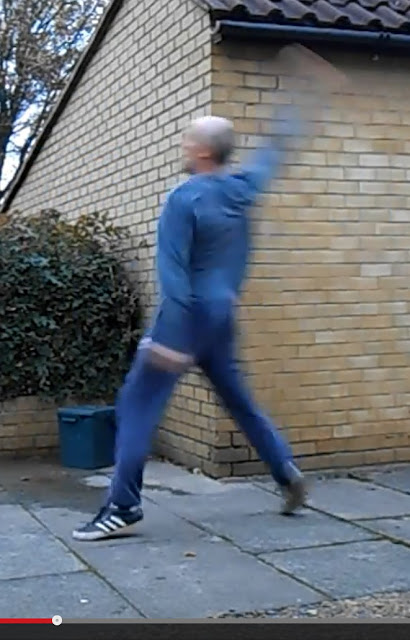

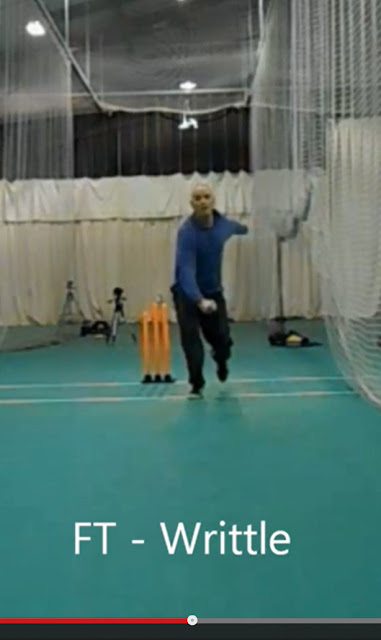




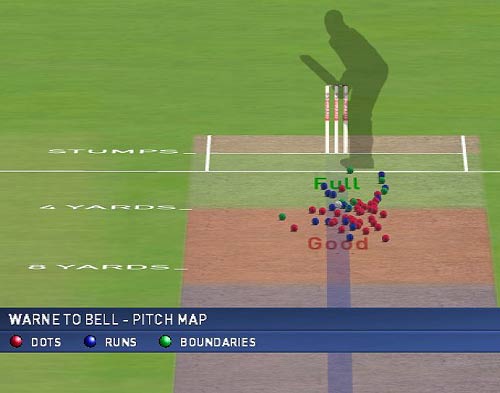
![[IMG]](http://www.cricinfo.com/db/PICTURES/CMS/69200/69247.jpg)
![[IMG]](http://www.cricinfo.com/db/PICTURES/CMS/69200/69248.jpg)


.jpg)